


Many people looking for a brokerage today want two things at the same time: low trading costs and a platform they can rely on long term.
With dozens of online brokers offering commission-free trades, the real difference often comes down to transparency, tools, and how well everything works together once your account is active.
Charles Schwab has been part of the U.S. investing landscape for decades and positions itself as a full-service brokerage rather than a trading app built around short-term activity.
Instead of focusing on a single audience, Schwab aims to serve beginners, long-term investors, and active traders under one ecosystem.
This review takes a closer look at how Charles Schwab works, what it offers, how pricing is structured, and who the platform is best suited for.
What Is Charles Schwab?
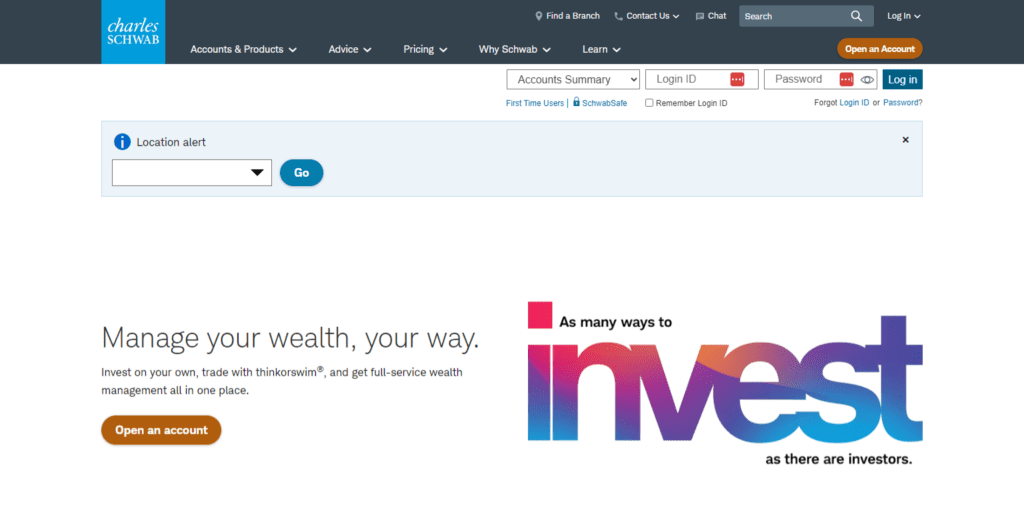
Charles Schwab is a U.S.-based brokerage and financial services company that allows individuals to invest in stocks, ETFs, options, mutual funds, bonds, and other assets through self-directed accounts.
In addition to investing, Schwab also provides retirement accounts, cash management features, and advisory services.
Rather than positioning itself as a trading-only platform, Schwab operates as an all-in-one financial provider. Investors can manage taxable brokerage accounts, IRAs, and cash accounts in one place, with optional access to professional advice if needed.
The focus is on accessibility and scale, offering tools that can support simple investing as well as more advanced strategies over time.
How Charles Schwab Works
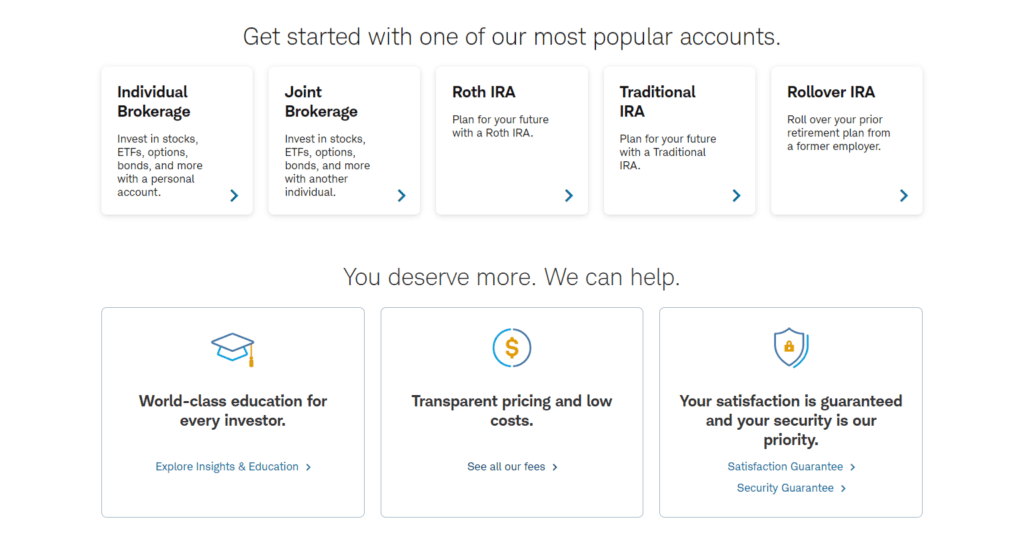
Schwab allows users to open most brokerage and retirement accounts online, typically without a minimum deposit requirement.
Once an account is opened and funded, investors can place trades through Schwab’s web platform, mobile app, or advanced trading software.
The platform supports a wide range of account types, including individual brokerage accounts, joint accounts, traditional and Roth IRAs, and custodial accounts.
Cash management features allow users to move money between investing and spending accounts more easily.
Schwab also integrates research, education, and portfolio tracking tools directly into the platform, allowing investors to monitor performance and access market information without relying on external services.
Trading Platforms and Experience
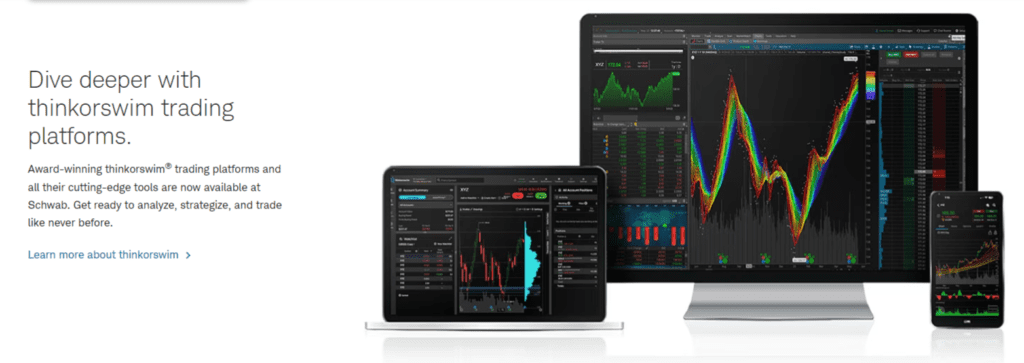
Schwab offers multiple trading interfaces depending on experience level and trading style.
The standard web and mobile platforms are designed for everyday investing, with straightforward order placement and account management tools.
For more advanced traders, Schwab provides access to thinkorswim, a professional-grade trading platform with advanced charting, technical indicators, and customizable layouts.
U.S.-listed stocks and ETFs traded online are commission-free, which aligns Schwab with most major competitors. Options trades do not carry a base commission, reminding only a per-contract fee. Futures and certain specialized products involve additional costs.
While the platform is robust, newer investors may find the range of tools overwhelming at first. That said, the flexibility allows users to start simple and grow into more advanced features over time.
Costs, Fees, and Pricing Structure
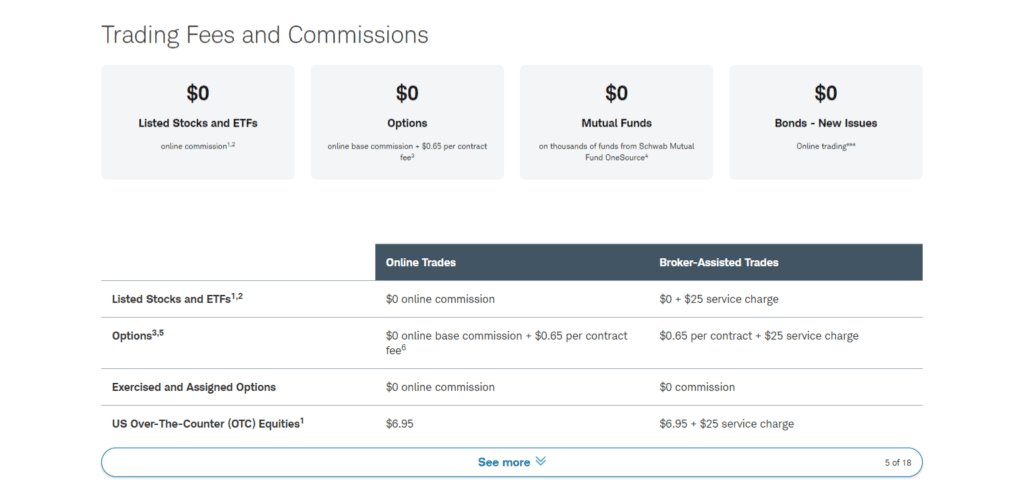
Schwab is generally transparent about its pricing structure.
Online trades for U.S.-listed stocks and ETFs carry no commission. Options trades are charged on a per-contract basis, and futures trades involve a per-contract fee. Some mutual funds are available with no transaction fees, while others may include a purchase fee.
Broker-assisted trades placed with a representative typically cost more than online trades. Regulatory and exchange fees may also apply depending on the asset being traded.
Most standard brokerage and retirement accounts do not have monthly maintenance fees or minimum balance requirements.
Advisory services, when used, are priced separately and are typically based on a percentage of assets under management.
Rules and Limitations to Be Aware Of
Although many trades are commission-free, not all products qualify under that pricing structure.
Over-the-counter securities, certain foreign investments, and specific mutual funds may involve additional fees.
Trades placed by phone or with live assistance generally cost more than self-directed online trades. As with most U.S. brokers, regulatory fees may apply to sell orders.
Schwab does not market itself as a high-leverage or speculative trading platform. Investors looking for aggressive margin structures or crypto-focused trading may find limitations compared to more specialized platforms.
Who Charles Schwab Is Best For
Charles Schwab works best for investors who want a long-term, stable brokerage with a wide range of services.
It is well suited for beginners who value education and structure, as well as experienced traders who want access to advanced tools like thinkorswim.
The platform also fits investors who prefer managing investing and cash accounts in one ecosystem rather than spreading funds across multiple providers.
Those looking for simple, low-cost access to U.S. markets without account minimums may also find Schwab appealing.
Frequently Asked Questions
Does Charles Schwab Charge Commissions on Stock Trades?
Online trades for U.S.-listed stocks and ETFs are commission-free, though regulatory fees may still apply.
Is There a Minimum Deposit to Open a Schwab Account?
Most brokerage and retirement accounts do not require a minimum deposit to open.
Does Schwab Offer Advanced Trading Tools?
Yes. Schwab provides access to thinkorswim for advanced charting and technical analysis.
Can Beginners Use Charles Schwab?
Yes. Schwab offers educational resources and simple trading tools suitable for new investors, with room to grow into more advanced features.
Conclusion
Charles Schwab offers a comprehensive brokerage experience built around low-cost trading, broad market access, and long-term account flexibility.
Its commission-free stock and ETF trades, combined with strong research tools and multiple trading platforms, make it competitive for a wide range of investors.
While the platform may feel complex at first and certain niche products carry additional costs, Schwab’s consistency and transparency help set clear expectations. For investors looking for a well-established brokerage that can grow with them over time, Charles Schwab remains a solid option.