



Futures trading is popular because contracts are standardized, pricing is transparent, and execution happens on regulated exchanges like the CME.
Traders know contract sizes, tick values, and expiration dates upfront, which makes planning and risk management more precise.
That said, futures brokers differ widely. Some focus on ultra-low per-contract pricing, others prioritize advanced platforms, and some bundle futures into larger investing ecosystems.
Choosing the right broker usually comes down to platform preference, cost structure, and how actively you trade.
How the Best Futures Brokers Compare
The futures brokers below are commonly used by active traders and are often compared for platform access, commission structure, and product availability.
Each section focuses on concrete details that help you understand how trading actually works on each platform.
1. Apex Trader Funding
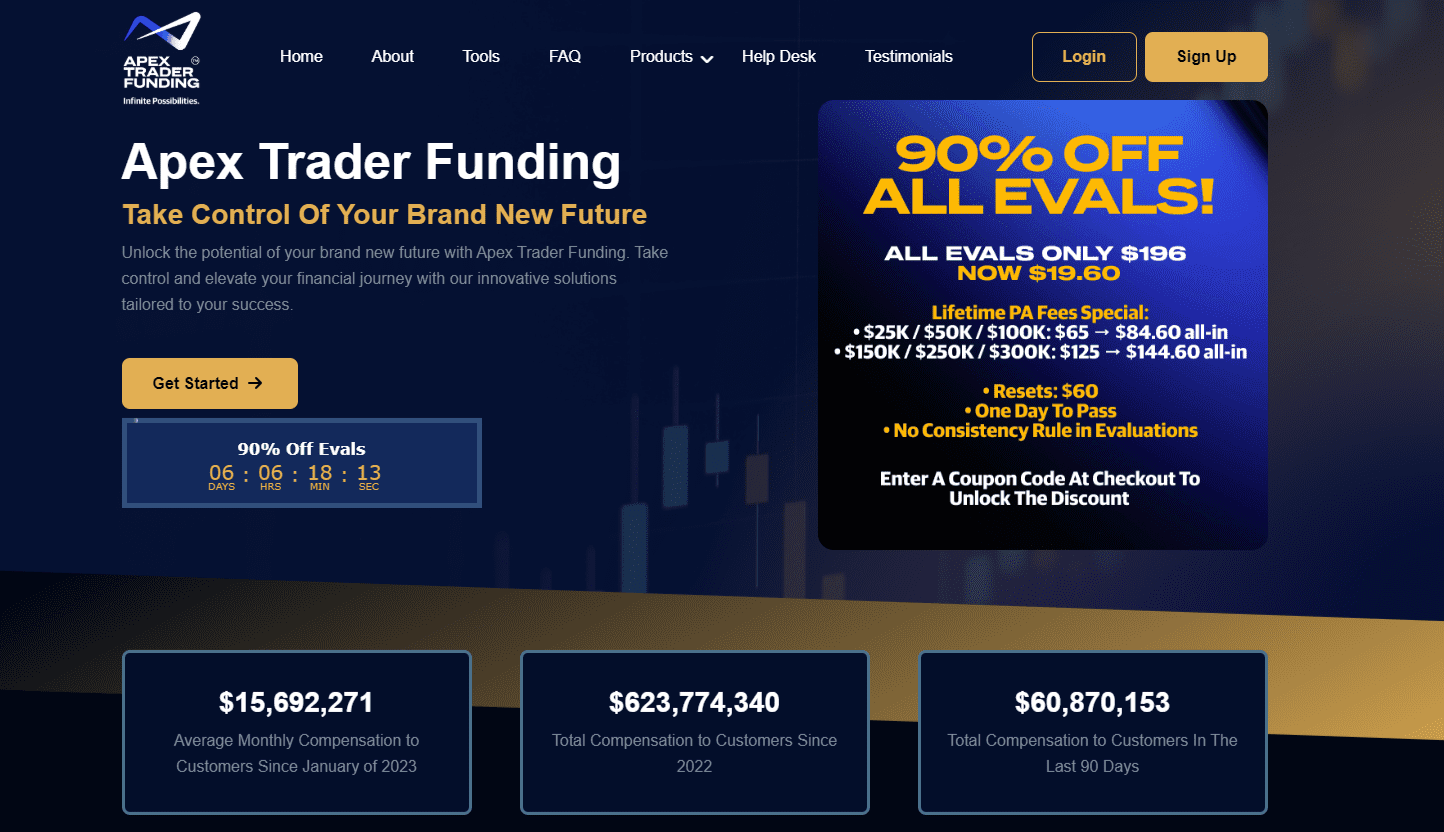
Apex Trader Funding provides funded futures trading through an evaluation-based model. Traders trade CME-listed futures contracts using platforms such as NinjaTrader, Tradovate, or Rithmic, following predefined risk parameters like trailing drawdown rules.
After meeting profit targets and compliance requirements, traders gain access to funded accounts to trade real futures markets.
✅ Pros:
- Access to CME micro and standard futures using firm capital.
- Supports multiple professional futures platforms.
- Published rules covering drawdowns, profit targets, and scaling.
❌ Cons:
- Ongoing rule compliance is mandatory.
2. Interactive Brokers Futures
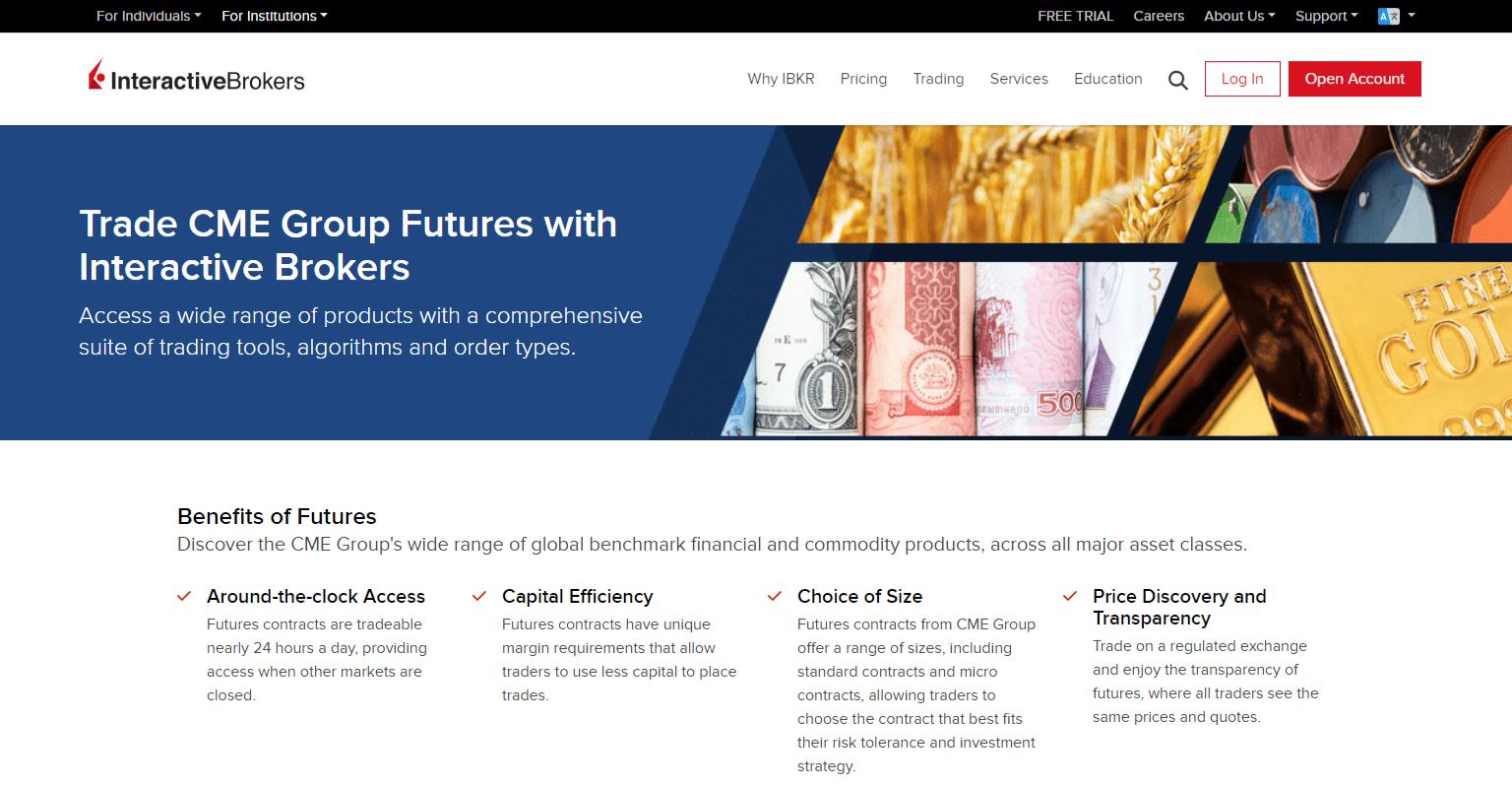
Interactive Brokers offers direct access to futures across major global exchanges, including CME, ICE, and Eurex.
Futures are traded through Trader Workstation (TWS), with published commission schedules that vary by contract and exchange. Margin requirements, overnight rates, and exchange fees are clearly documented, making it easier to model total trading costs.
✅ Pros:
- Broad global futures exchange access.
- Transparent, contract-based commission schedules.
- Advanced desktop, mobile, and API trading options.
❌ Cons:
- The platform requires a learning curve.
3. TradeStation Futures
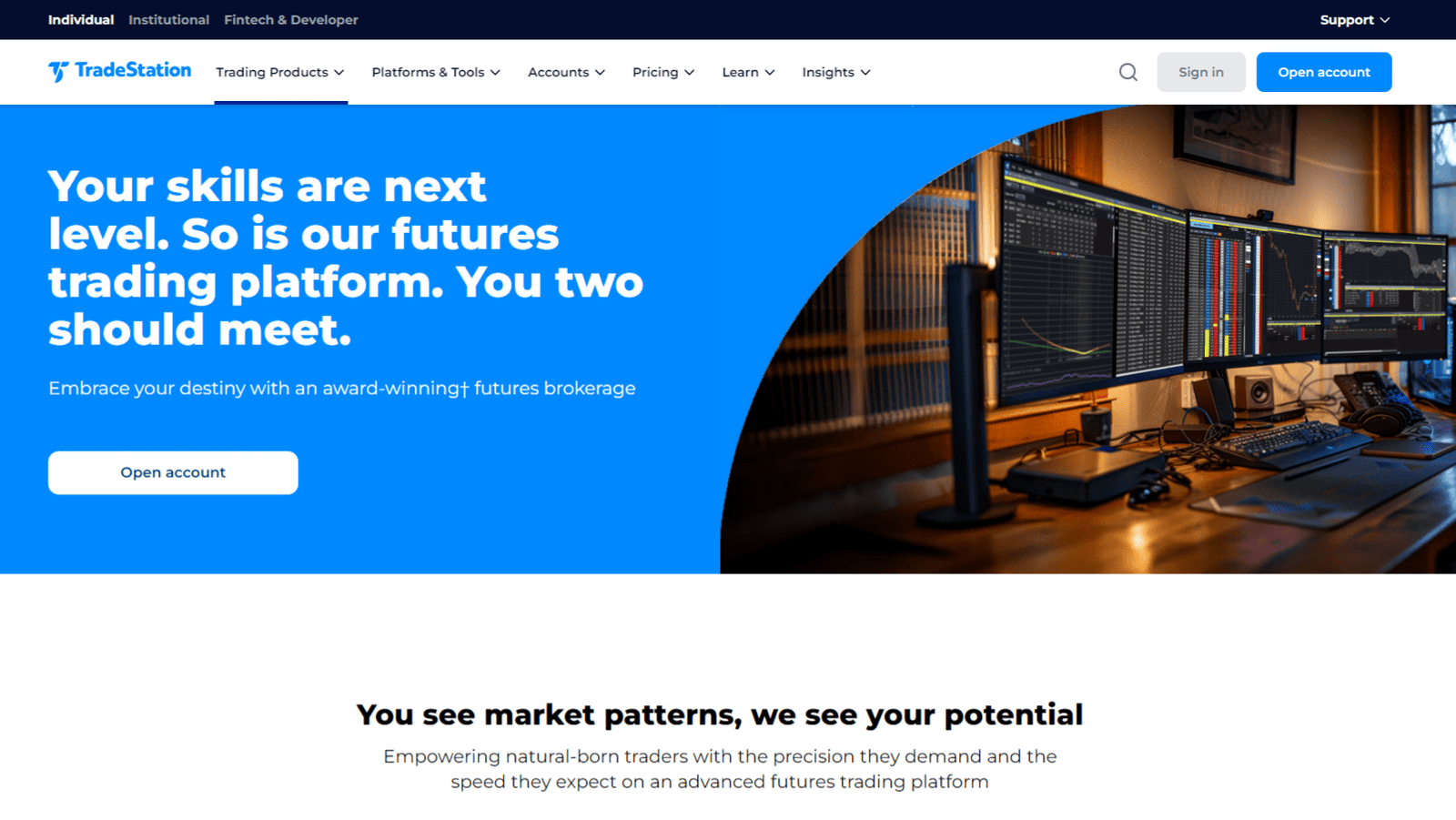
TradeStation provides futures trading through its FuturesPlus offering, with per-contract, per-side commissions published on its pricing pages.
Traders can access CME futures and manage trades within TradeStation’s proprietary platform, which integrates charting, order routing, and account analytics in one environment.
✅ Pros:
- Clearly stated per-contract pricing.
- Integrated platform for analysis and execution.
- Established brokerage infrastructure.
❌ Cons:
- Exchange and clearing fees apply separately.
- Platform customization can take time.
4. NinjaTrader Futures

NinjaTrader is built specifically for futures trading and is commonly used by active and intraday futures traders.
Traders can access CME futures using the NinjaTrader platform, with pricing tiers that change based on account type. Day trading margin requirements and platform-related fees are publicly disclosed.
✅ Pros:
- Futures-first platform with advanced order tools.
- Published margin and pricing structures.
- Strong support for automated and discretionary trading.
❌ Cons:
- Pricing depends on account tier.
- Best features are desktop-focused.
5. Charles Schwab Futures
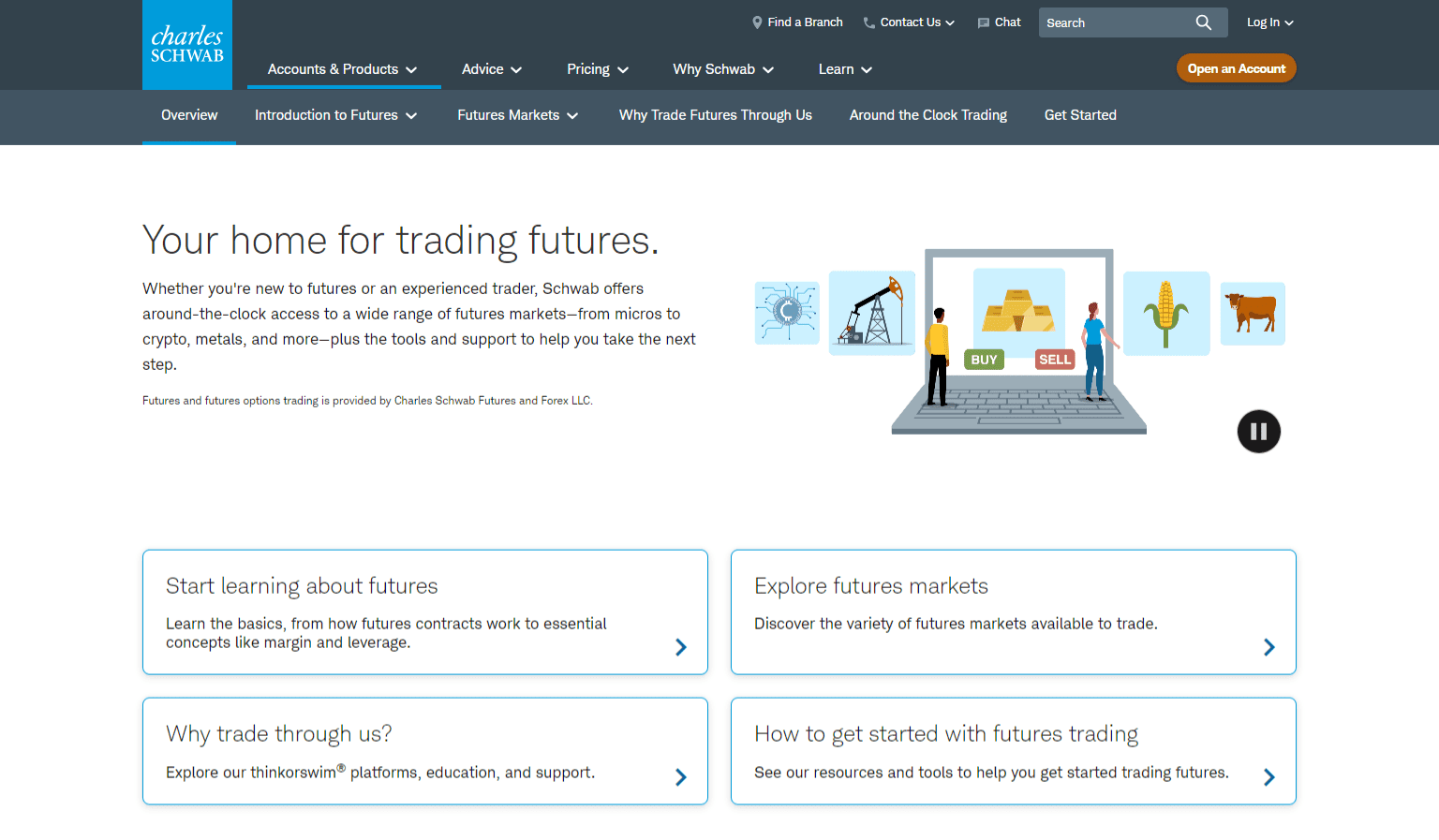
Charles Schwab offers futures trading within its broader brokerage ecosystem. Futures trades are placed using thinkorswim, with a published commission rate of $2.25 per contract per side, plus exchange and regulatory fees.
This setup suits traders who want futures alongside stocks, options, and long-term investments.
✅ Pros:
- Fixed, publicly stated commission rate.
- Access to thinkorswim futures tools.
- Convenient for multi-asset portfolios.
❌ Cons:
- Higher per-contract pricing than futures-only brokers.
- Limited customization compared to specialist platforms.
6. E*TRADE Futures
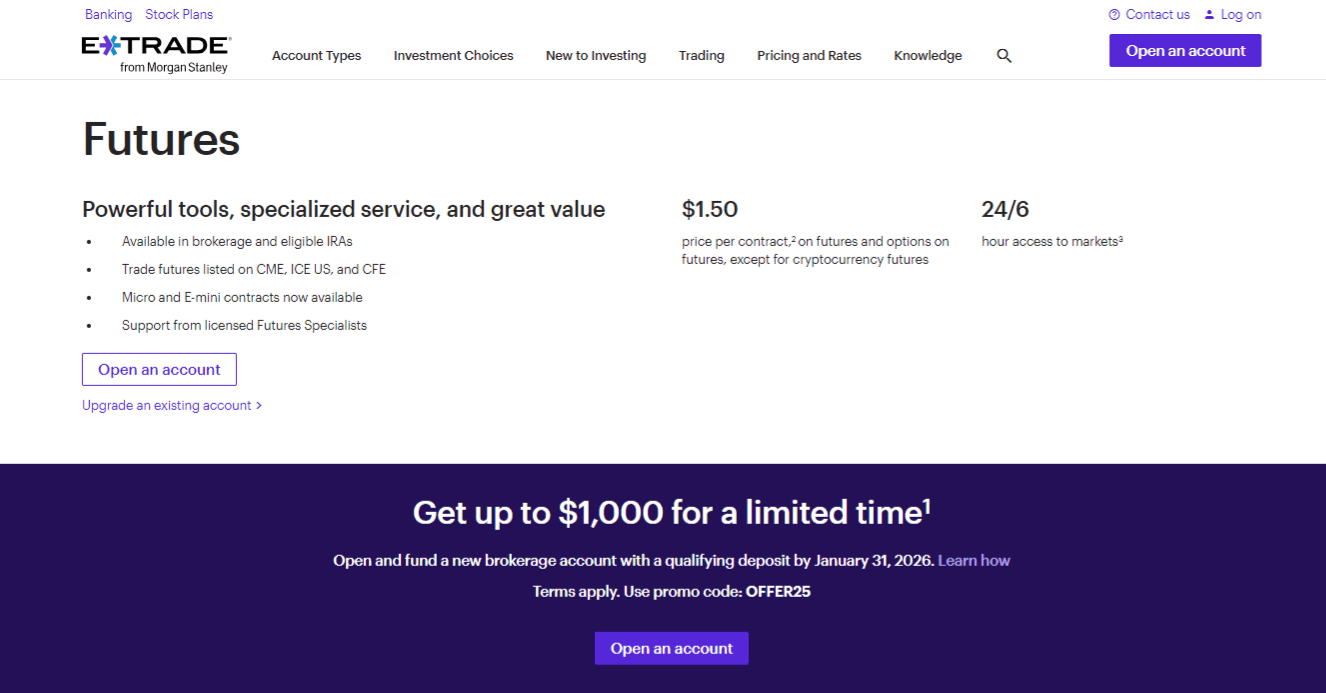
ETRADE supports futures trading through Power ETRADE, combining futures with options and equities in a single platform.
The broker lists a $1.50 per contract per side commission for standard futures, with separate pricing for crypto futures. Contract access depends on approval level and product eligibility.
✅ Pros:
- Competitive per-contract pricing.
- Unified platform for multiple asset classes.
- Familiar interface for active traders.
❌ Cons:
- Exchange and NFA fees add to total cost.
- Fewer platform choices than futures specialists.
7. Webull Futures

Webull provides futures access within its mobile-first trading environment. Futures are typically focused on micro contracts, making position sizing more approachable for smaller accounts.
Pricing details are available through disclosures and third-party breakdowns rather than a single consolidated futures pricing page.
✅ Pros:
- App-centric futures access.
- Micro futures availability.
- Low entry barrier for active traders.
❌ Cons:
- Futures pricing details require deeper review.
- Limited professional routing tools.
8. Optimus Futures
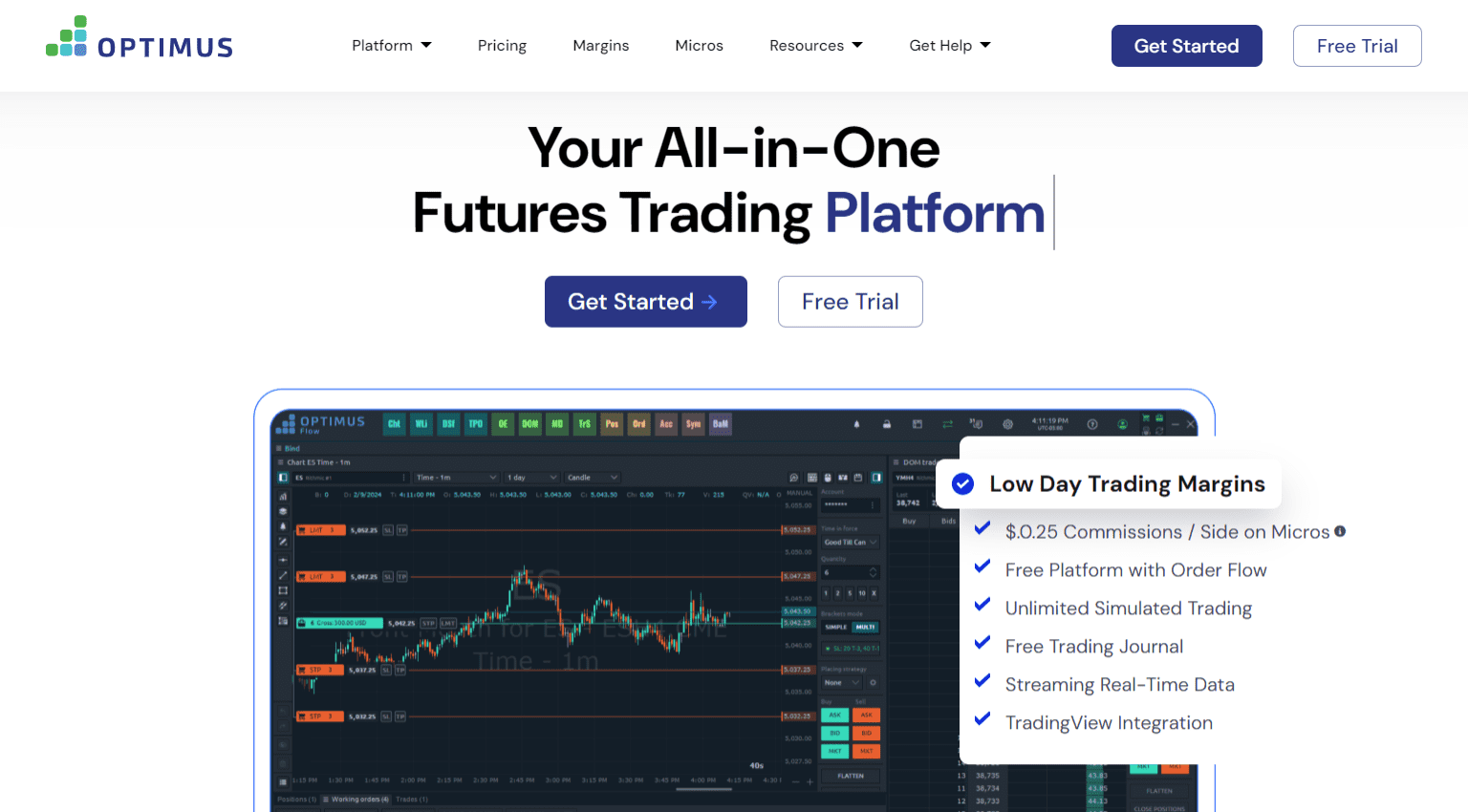
Optimus Futures is a futures-specialist broker known for publishing detailed commission examples for both micro and standard contracts.
Traders can choose from multiple professional platforms, including NinjaTrader, Sierra Chart, and CQG, with pricing that separates commissions from exchange and NFA fees.
✅ Pros:
- Transparent commission examples.
- Wide selection of professional platforms.
- Futures-only brokerage focus.
❌ Cons:
- Platform choice requires setup decisions.
- Margin and fees vary by contract.
9. Plus500
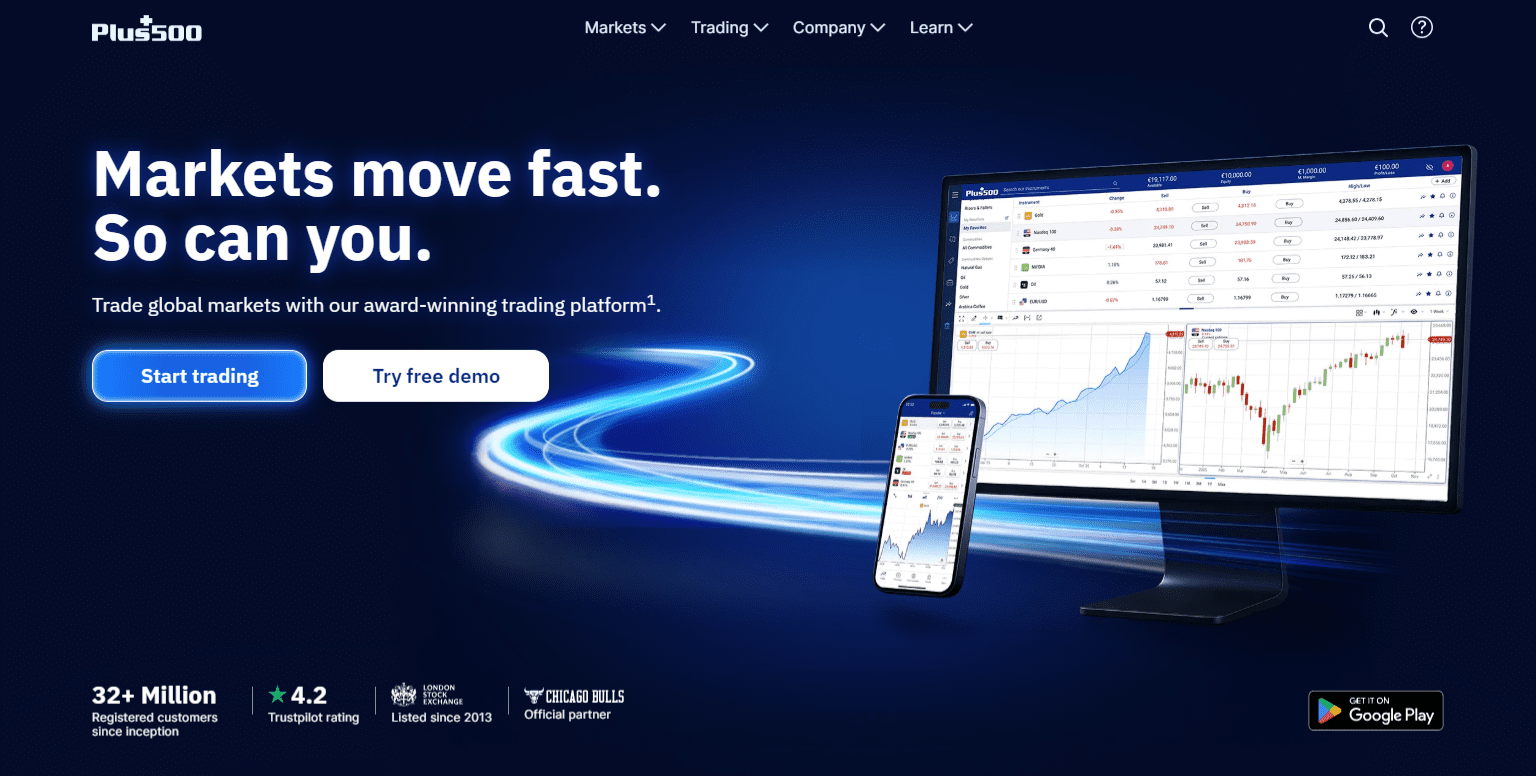
Plus500 offers futures trading in the US through its Plus500US platform. The broker publishes per-side pricing for micro and standard futures contracts and discloses additional costs such as auto-liquidation fees. Futures trading is distinct from Plus500’s CFD offerings outside the US.
✅ Pros:
- Published micro and standard futures commissions.
- Straightforward platform design.
- Clear separation between futures and CFDs.
❌ Cons:
- Fewer platform integrations.
- Product availability limited to supported contracts.
How These Futures Brokers Compare
The table below summarizes how each futures broker differs in trading model, platform support, contract access, and overall use case.
| Broker | Futures Access Model | Supported Platforms | Contract Types | Commission Structure | Best For |
| Apex Trader Funding | Funded account (evaluation-based) | NinjaTrader, Tradovate, Rithmic | Micro & Standard CME | Evaluation fees + rules-based model | Traders seeking funded capital |
| Interactive Brokers | Direct brokerage access | Trader Workstation, mobile, API | Global futures (CME, ICE, Eurex) | Contract-based, varies by exchange | Global, multi-market traders |
| TradeStation Futures | Direct brokerage access | TradeStation platform | CME futures | Per-contract, per-side + fees | Platform-centric traders |
| NinjaTrader Futures | Futures-first brokerage | NinjaTrader (desktop-focused) | CME micro & standard | Tiered pricing by account | Active and intraday traders |
| Charles Schwab Futures | Full-service brokerage | thinkorswim | CME futures | $2.25 per contract per side + fees | Multi-asset investors |
| E*TRADE Futures | Full-service brokerage | Power E*TRADE | CME futures | $1.50 per contract per side + fees | Active traders wanting one platform |
| Webull Futures | App-based brokerage | Webull mobile & desktop | Micro futures | Disclosed via platform documentation | Smaller accounts, mobile users |
| Optimus Futures | Futures-specialist brokerage | NinjaTrader, Sierra Chart, CQG | Micro & standard futures | Commission + exchange/NFA fees | Cost-sensitive futures traders |
| Plus500 | Futures-only | Plus500 platform | Micro & standard futures | Per-side pricing + auto-liquidation fees | Simplicity-focused futures traders |
Frequently Asked Questions
What Is the Best Futures Broker Overall?
The best futures broker depends on your trading style, platform preference, and sensitivity to per-contract costs.
Are Futures Brokers Suitable for Beginners?
Yes, especially when starting with micro contracts and using platforms that clearly display margin and risk.
Do All Futures Brokers Charge the Same Fees?
No. Commissions, exchange fees, clearing fees, and margin requirements vary by broker and contract.
What Should I Compare When Choosing a Futures Broker?
Platform access, commission structure, contract availability, margin policies, and fee transparency are the most important factors.