


Many investors looking for a long-term brokerage want more than just low trading fees. They often care just as much about research access, product variety, and whether a platform can support both simple investing and more involved strategies over time.
Fidelity has built its reputation around that broader approach. Rather than focusing only on active trading or casual investing, Fidelity positions itself as a full-service investment platform that supports self-directed investors, retirement savers, and those who want access to extensive research and planning tools.
This review looks at how Fidelity works, the investment options it offers, how pricing is structured, and which types of investors are most likely to benefit from using the platform.
What Is Fidelity?
Fidelity is a U.S.-based financial services company that provides brokerage accounts, retirement accounts, and a wide range of investment and wealth management services.
Through its brokerage platform, individuals can invest in stocks, ETFs, mutual funds, bonds, options, and other securities.
In addition to self-directed investing, Fidelity also offers managed investment solutions and retirement planning services. This allows investors to choose between handling their own portfolios or using automated and advisory options depending on their preferences.
The platform is widely used by long-term investors and retirement savers, but it also includes tools designed to support more active trading strategies.
Opening an Account and How Trading Works
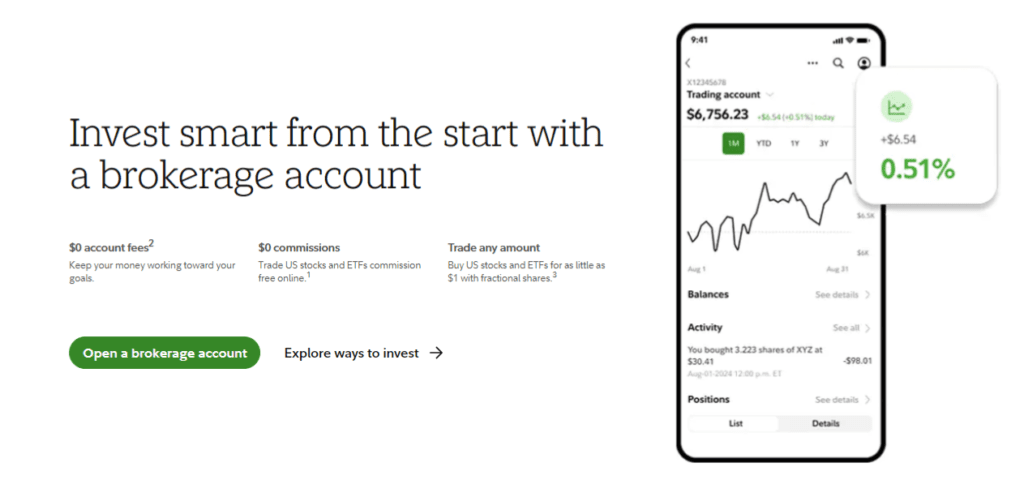
Fidelity allows users to open most brokerage and retirement accounts online, typically without a minimum deposit requirement.
Once an account is funded, investors can place trades through Fidelity’s web platform or mobile app.
The brokerage supports a broad range of account types, including individual and joint brokerage accounts, traditional and Roth IRAs, and custodial accounts. Trades are executed directly through the platform, with access to real-time quotes and order tracking.
For investors who prefer a more hands-off approach, Fidelity also offers managed portfolio options that handle investment selection and rebalancing automatically, though these services involve separate pricing.
Investment Options and Product Breadth
One of Fidelity’s defining features is the range of investment products available on the platform.
Investors can trade U.S. and international stocks, ETFs, options, mutual funds, bonds, and certificates of deposit. Fidelity is also known for offering a large selection of proprietary and third-party mutual funds, including funds with zero expense ratios.
This breadth makes Fidelity suitable for building diversified portfolios across different asset classes.
Investors can combine individual securities with funds, fixed-income products, and long-term investment vehicles without needing to use multiple platforms.
Tools, Research & Trading Platforms

Fidelity places strong emphasis on research and education.
The platform provides access to screeners, analyst reports, market commentary, and educational materials designed to help investors make informed decisions.
These resources are integrated directly into the trading experience rather than offered as separate tools.
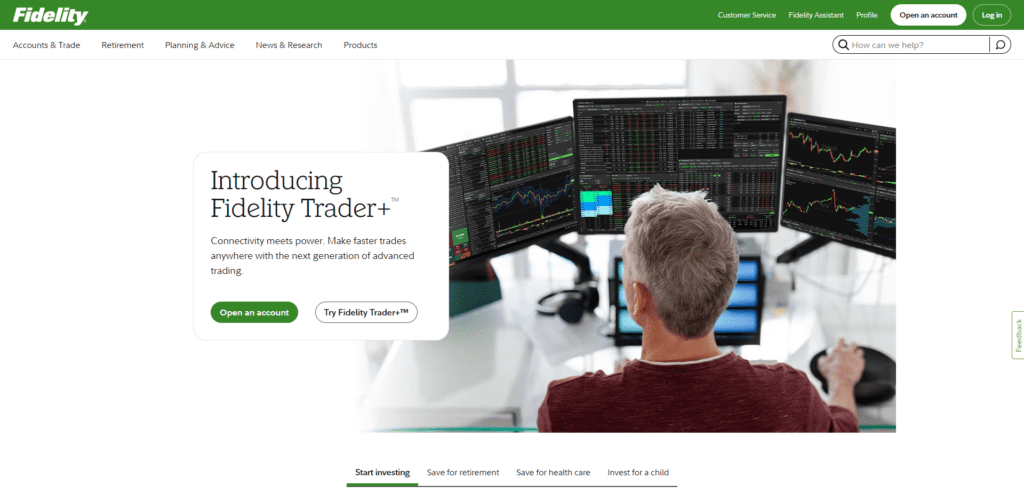
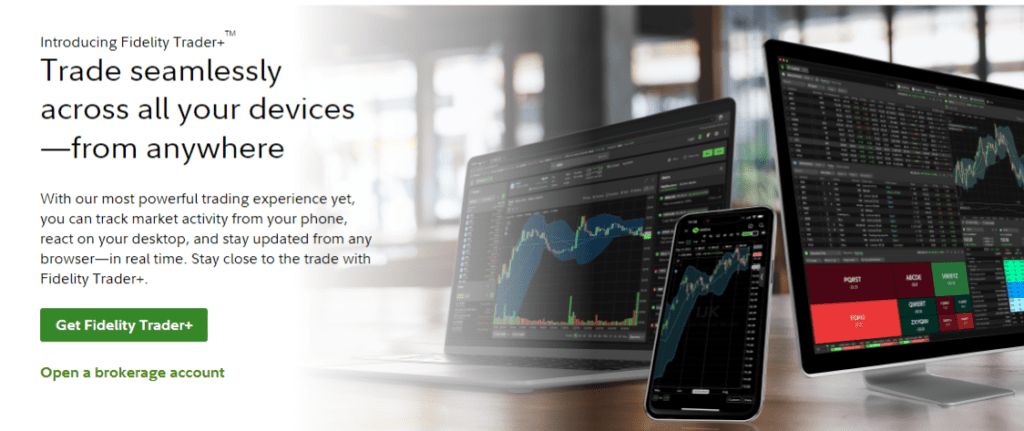
For active traders, Fidelity offers advanced trading tools and enhanced charting through its desktop and web-based platforms. While the interface is designed to remain accessible, it also includes features that support technical analysis and more frequent trading.
This combination allows users to start with basic tools and gradually incorporate more advanced features as their experience grows.
Fees, Commissions & Pricing
Fidelity offers commission-free online trading for U.S.-listed stocks and ETFs. Options trades do not carry a base commission but are subject to a per-contract fee.
Most standard brokerage and retirement accounts do not have maintenance fees. Fidelity does not charge account opening fees or require minimum balances for most retail accounts.
Certain products and services involve additional costs. Bond trades may include markups, and some mutual funds carry transaction fees or short-term redemption fees. Managed investment services are priced separately, typically based on assets under management.
Overall, Fidelity’s pricing structure is transparent, though costs can vary depending on the types of investments and services used.
Account Features and Other Considerations
Beyond trading, Fidelity offers several account features that support day-to-day money management and long-term planning.
These include cash management options, fractional share investing, and access to customer support.
Fidelity also provides retirement planning tools, calculators, and educational content aimed at helping users plan for long-term goals. Investors can link multiple accounts to view their financial picture in one place.
While the platform is feature-rich, users who are only interested in simple, occasional trades may not use many of these tools. Fidelity’s strength lies in offering depth and flexibility rather than a stripped-down trading experience.
Who Fidelity Is Best For
Fidelity is well suited for long-term investors and retirement savers who want access to a wide range of investment products.
It also works well for self-directed investors who value research tools and educational resources.
The platform can support active traders, though its core appeal is flexibility rather than specialization in high-frequency or niche trading.
Investors who want both DIY investing and optional managed solutions may find Fidelity especially appealing.
Frequently Asked Questions
Does Fidelity Charge Commissions on Stock and ETF Trades?
Online trades for U.S.-listed stocks and ETFs are commission-free, though other fees may apply for certain products and services.
What Investment Products Can You Trade at Fidelity?
Fidelity supports stocks, ETFs, mutual funds, bonds, options, and other fixed-income products.
Are There Fees for Mutual Funds at Fidelity?
Many mutual funds are available without transaction fees, though some funds may carry purchase or redemption fees.
Does Fidelity Offer Tools for Active Traders?
Yes. Fidelity provides research tools, charting features, and trading platforms designed to support both long-term and more active trading strategies.
Conclusion
Fidelity offers a comprehensive investment platform built around low-cost trading, extensive product selection, and strong research support.
Its commission-free stock and ETF trades, combined with access to funds, fixed income, and planning tools, make it suitable for a wide range of investing styles.
While some products and services involve additional fees, Fidelity is transparent about its pricing and provides tools to help investors understand their choices.
For those looking for a long-established brokerage that can support both simple and more involved investment strategies, Fidelity remains a strong option.