



A lot of new investors start by looking for a platform that removes friction from the investing process.
Instead of complex tools or layered fee structures, the priority is often ease of use, low barriers to entry, and the ability to place trades quickly without feeling overwhelmed.
Robinhood built its brand around that idea. Rather than positioning itself as a full-service brokerage, Robinhood focuses on simple, app-based investing with commission-free access to popular asset classes.
This review looks at how Robinhood works, what you can trade on the platform, how pricing is structured, and who it’s most suitable for.
What Is Robinhood?

Robinhood is a mobile-first brokerage platform designed to make investing more accessible to everyday users. It allows individuals to trade stocks, ETFs, options, and cryptocurrencies through a streamlined app and web interface.
The platform is known for removing traditional trading commissions and simplifying account setup.
Instead of offering a wide range of advisory or institutional tools, Robinhood emphasizes accessibility, ease of navigation, and fast trade execution.
Robinhood is primarily aimed at self-directed investors who want a straightforward way to participate in the markets without dealing with complex brokerage features.
Account Setup and How Trading Works
Opening a Robinhood account is handled entirely online. Users can sign up, verify their identity, and fund their account through linked bank transfers.
Once funded, trades can be placed directly through the mobile app or web platform.
Robinhood supports standard brokerage accounts and allows users to place market and limit orders for supported assets.
Fractional shares are available for certain investments, which allows users to invest smaller amounts rather than buying full shares.
The platform is designed to keep the trading process simple, with most actions accessible within a few taps.
What You Can Trade on Robinhood
Robinhood offers access to several major asset classes commonly used by retail investors.
Users can trade U.S.-listed stocks and ETFs, including fractional shares for many securities. Options trading is also supported, with tools designed to make basic options strategies accessible to newer traders.
Robinhood also provides cryptocurrency trading for a selection of digital assets. In addition, the platform offers cash management features that allow users to earn interest on uninvested funds, depending on account settings and region.
The product selection is focused on popular, widely traded assets rather than niche or complex instruments.
Fees, Pricing, and Payment Structure
Robinhood is widely associated with commission-free trading. The platform does not charge commissions for stock, ETF, or options trades placed through the app.
While there are no traditional trading commissions, certain costs can still apply. Options trades may include regulatory fees, and margin trading involves interest charges.
Robinhood also offers a premium subscription that provides access to additional features for a monthly fee.
Cryptocurrency trades are commission-free, but pricing may include spreads or network fees when transferring assets off the platform. As with most brokerages, regulatory and third-party fees can apply depending on the transaction.
App Design, Tools, and User Experience
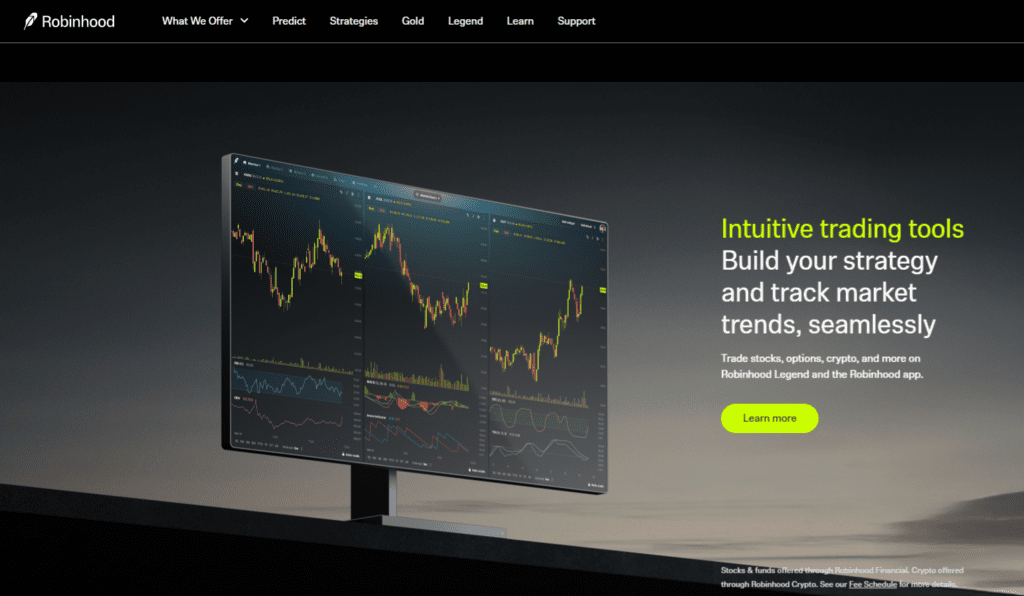
Robinhood’s platform is built around simplicity and mobile usability rather than advanced customization.
Mobile-first trading experience
The Robinhood app is designed for quick navigation, with a clean layout that makes it easy to view prices, place trades, and track account balances from a smartphone.
Basic research and data tools
Users have access to price charts, basic financial information, earnings data, and news summaries. The research tools are intentionally limited compared to full-service brokers.
Extra features and ecosystem tools
Additional features include recurring investments, price alerts, and optional premium upgrades that unlock extra data or account benefits.
Overall, the user experience prioritizes ease of use over depth.
Important Limitations to Understand
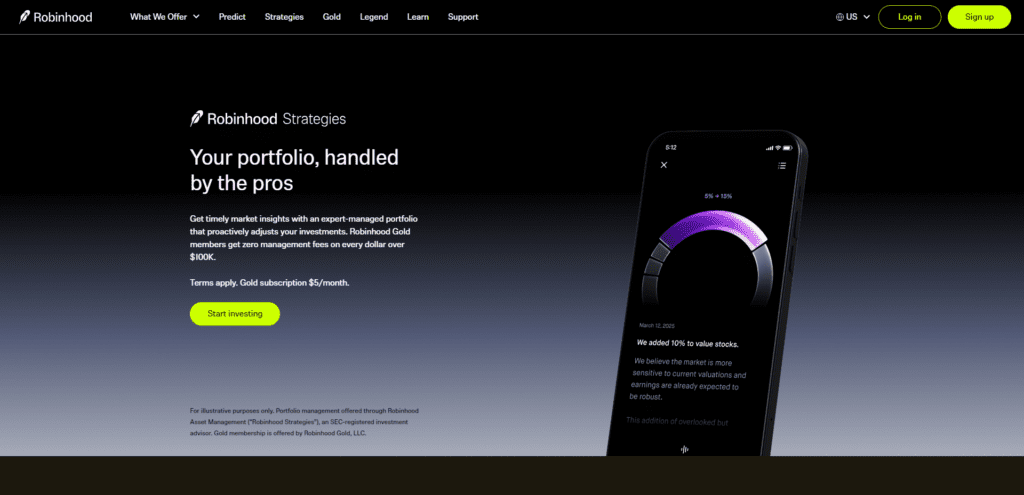
Robinhood does not offer the same level of research tools, portfolio analysis, or customization found on more advanced brokerage platforms.
Traders who rely heavily on technical indicators, detailed analytics, or complex order types may find the platform limiting.
The simplified interface also means fewer educational prompts or planning tools compared to traditional brokerages.
Robinhood is best viewed as a streamlined entry point rather than a comprehensive investment workstation.
Who Robinhood Is Best For
Robinhood is well suited for new investors who want commission-free access to stocks, ETFs, and crypto through a simple app.
It also fits mobile-focused users who prefer managing investments from their phone.
The platform works well for investors using fractional shares or recurring investments, but it may not meet the needs of traders looking for advanced analysis or professional-grade tools.
Frequently Asked Questions
Does Robinhood Charge Commissions on Stock and ETF Trades?
Robinhood does not charge commissions on stock or ETF trades placed through its platform, though regulatory fees may still apply.
Can You Buy Fractional Shares on Robinhood?
Yes. Robinhood supports fractional share investing for many stocks and ETFs.
Does Robinhood Support Options and Crypto Trading?
Robinhood allows users to trade options and a selection of cryptocurrencies through the platform.
Is Robinhood Suitable for Long-Term Investing?
Robinhood can be used for long-term investing, but it offers fewer planning and research tools than traditional full-service brokerages.
Conclusion
Robinhood offers a straightforward approach to investing built around simplicity, commission-free trades, and mobile accessibility.
Its ease of use and low barrier to entry make it appealing for beginners and casual investors.
While the platform has clear limitations in terms of research depth and advanced tools, it succeeds at its core goal of making investing more accessible.
For users who value simplicity over complexity, Robinhood remains a practical option.