


Binary options look simple on the surface, which is why many traders focus on strategies before thinking about risk.
The reality is that fixed payouts and short expiries leave very little room for mistakes. A few impulsive trades or a losing streak can quickly erase an account.
That’s why risk management matters more than any entry method. Instead of trying to win every trade, the goal is to control how much you lose when trades don’t work.
This guide explains practical ways to manage risk so trading becomes more structured and less emotional.
Why Binary Options Carry Unique Risk

In binary options trading, each trade has a fixed outcome. You either receive a fixed return or lose the full stake.
This structure encourages fast decision-making and frequent trading, which can lead to emotional choices.
Because trades often expire quickly, short-term price noise plays a larger role. Even strong setups can fail due to small, random movements.
Thinking in terms of sessions and streaks, rather than individual trades, helps create a more realistic mindset.
Position Size: The Most Important Decision
Position size determines how much of your account is exposed on every trade. Larger trade sizes may feel exciting, but they also make losing streaks harder to survive.
Many traders prefer using a fixed, small amount per trade. This keeps results consistent and prevents emotional changes after wins or losses.
Consistency matters more than aggression. Increasing trade size rarely fixes weak decision-making. It only increases the impact of mistakes.
Daily Limits and Session Rules
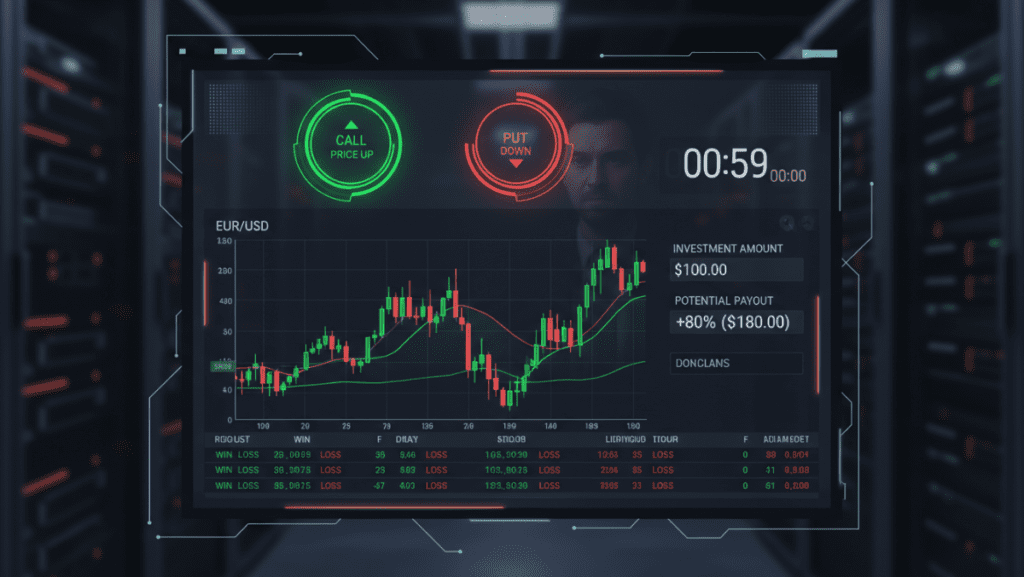
Daily limits act as a safety net. They prevent one difficult session from turning into a much larger loss.
Common limits include:
- A daily loss cap
- A maximum number of trades per session
Once a limit is reached, the trading session ends. This rule can feel restrictive, but it protects traders from revenge trading and emotional decisions.
Stepping away after hitting a limit is often one of the most effective risk-control habits.
Handling Losing Streaks
Losing streaks are normal in any form of trading. The danger comes from how traders react to them.
Protective habits during losing streaks include:
- Taking a break after several losses
- Reducing trade size instead of increasing it
- Avoiding unclear or choppy market conditions
The goal during a losing streak is not to recover losses immediately. It is to prevent small losses from becoming large ones.
Expiry Time as a Risk Tool
Expiry time is often treated as part of strategy, but it is also a major risk factor.
Very short expiries rely heavily on quick price movement and can feel unpredictable. Longer expiries allow price more time to move, which can reduce the impact of small fluctuations.
Choosing expiry based on market conditions helps align trades with actual price behavior instead of guesswork.
Trade Filtering Is Risk Management
Risk management isn’t only about trade size. It also includes deciding when not to trade.
Low-quality conditions often include:
- Sideways or choppy markets
- Periods of major news or announcements
- Trading out of boredom or frustration
Skipping poor conditions reduces exposure to unnecessary risk. Sometimes the safest trade is no trade at all.
Emotional Risk and Trading Psychology
Risk management isn’t only about numbers. Emotions often cause the biggest losses.
After a losing trade, many traders feel the urge to win the money back quickly. This leads to revenge trading and rushed decisions. Instead of waiting for a clear setup, trades become reactive and inconsistent.
Winning streaks can create the opposite problem. Confidence can turn into overconfidence, which leads to larger trades and weaker setups.
Boredom is another hidden risk. Markets are not always active, but the temptation to stay busy can lead to unnecessary trades.
Taking breaks and sticking to session rules helps reduce emotional decisions and keeps trading more controlled.
Platform Risk and Safety Considerations
Risk in binary options isn’t limited to market movement. The platform itself can also affect your trading experience. This is why research and caution matter before depositing money.
A reliable platform should be transparent about how deposits and withdrawals work, how long transactions take, and what verification is required.
If this information is unclear or difficult to find, it can create problems later when you try to access your funds.
It’s also important to pay attention to pressure tactics and unrealistic promises. Platforms that encourage constant deposits or guarantee profits often create expectations that don’t match real trading conditions.
Taking time to research a platform and understand its policies helps reduce risks that have nothing to do with your trading decisions.
Tracking Trades Without Overcomplicating It

Tracking trades helps you see patterns you won’t notice during live trading. Without a simple record, it’s easy to remember wins more clearly than losses and assume a strategy works better than it actually does.
You don’t need a complex spreadsheet. A basic journal with the date, asset, expiry time, reason for entry, and result is enough.
Screenshots of a few trades each session can also help you review what the chart looked like at the time.
The goal is consistency. Reviewing trades weekly helps you spot habits, adjust rules, and make more informed decisions over time.
Frequently Asked Questions
What Percentage Should I Risk per Trade?
Many traders prefer small, fixed trade sizes to reduce the impact of losing streaks.
How Can I Stop Revenge Trading?
Setting daily limits and stepping away after losses helps reduce emotional decisions.
Why Do Binary Options Accounts Decline Quickly?
Frequent trading, large trade sizes, and emotional decisions can accelerate losses.
Is Tracking Trades Really Necessary?
Yes. Reviewing past trades helps identify patterns and improve decision-making over time.
Conclusion
Binary options risk management focuses on protecting your account so you can continue learning and improving.
Position sizing, daily limits, trade filtering, and disciplined habits all help reduce emotional decision-making.
While no approach removes risk completely, consistent risk control can make trading more structured and sustainable over time.