



EdgeWonk is known for its strong focus on trading psychology, but not every trader wants their journal to feel like a therapy session.
Many traders searching for EdgeWonk alternatives are using broker-connected journaling platforms that sync trades automatically and focus on execution, rule adherence, and performance data rather than emotional analysis.
Some want faster feedback, others want clearer execution metrics, and many want insights they can act on immediately after a session.
This guide explores practical journaling platforms used alongside brokers and prop firm accounts by traders who want to improve discipline and consistency without overanalyzing every thought or emotion.
Top EdgeWonk Alternatives
If EdgeWonk feels too psychology-heavy or slow for your daily workflow, these platforms offer different ways to improve discipline and consistency without overanalyzing emotions.
Each one approaches self-review from a more practical angle, focusing on behavior, execution, and repeatable improvement.
1. TradeZella
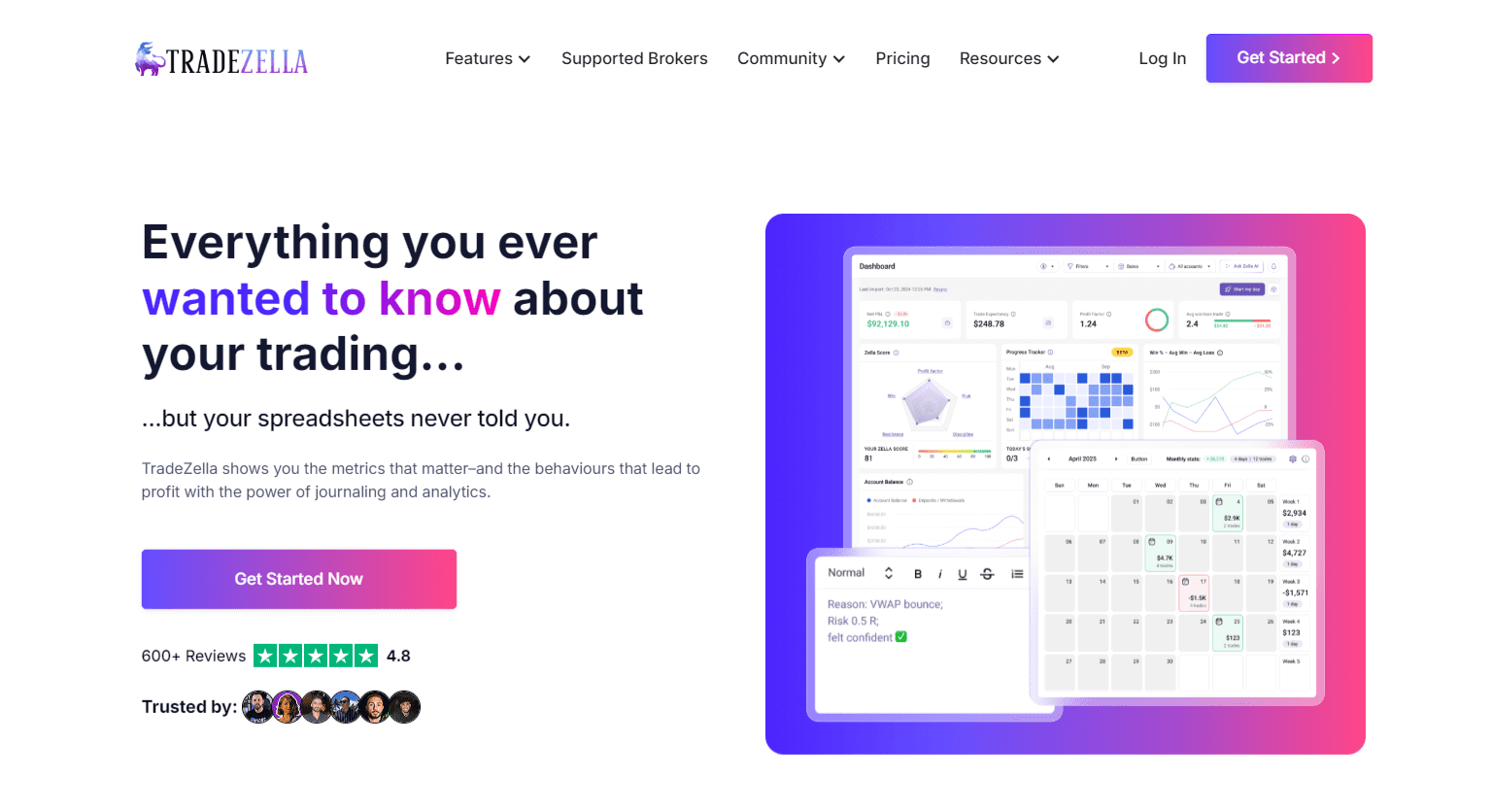
TradeZella is built for traders who want fast answers instead of long reflections.
Trades sync automatically, and the platform immediately highlights expectancy, consistency, and common execution mistakes.
Rather than asking how you felt, it shows where rules were broken and where discipline slipped. This makes reviews short, direct, and actionable.
Many traders moving away from psychology-first journals prefer TradeZella because it connects behavior to results without forcing emotional labeling.
Session-based breakdowns make it easy to spot overtrading or poor timing patterns, and visual summaries reduce the need for long written notes.
The platform works best when traders want clarity quickly and prefer fixing habits through data rather than introspection.
Best Use Case
- Traders who want fast, objective feedback
- Traders reviewing daily performance
- Traders who dislike heavy emotion tracking
2. TraderVue
TraderVue takes a structured and analytical approach to self-review.
It allows traders to tag trades by setup, mistake type, market condition, and timing, then filter results to uncover long-term patterns.
While it does not push psychology directly, it reveals behavioral issues through data consistency and repetition.
Traders often realize emotional problems indirectly, such as abandoning rules under specific conditions.
TraderVue suits traders who want depth and control in their review process and are willing to invest time upfront.
It feels less like a coaching tool and more like a performance database that steadily exposes decision flaws through evidence rather than reflection prompts.
Best Use Case
- Traders who prefer structured analysis
- Long-term performance improvement
- Strategy refinement through data
3. TraderSync
TraderSync balances performance metrics with light behavioral review. It tracks mistakes, rule adherence, and execution quality while still allowing notes and screenshots for context.
This makes it appealing to traders who want some psychological awareness without turning journaling into therapy.
Calendar views and replay-style visuals help traders review sessions as a whole, which often reveals emotional decisions more clearly than written notes.
TraderSync works well for traders transitioning away from psychology-first journals toward a more balanced approach.
It provides enough structure to improve discipline while keeping the review process grounded in actual trades and outcomes.
Best Use Case
- Traders wanting balance between data and context
- Discretionary traders reviewing execution
- Traders improving discipline gradually
4. Trademetria
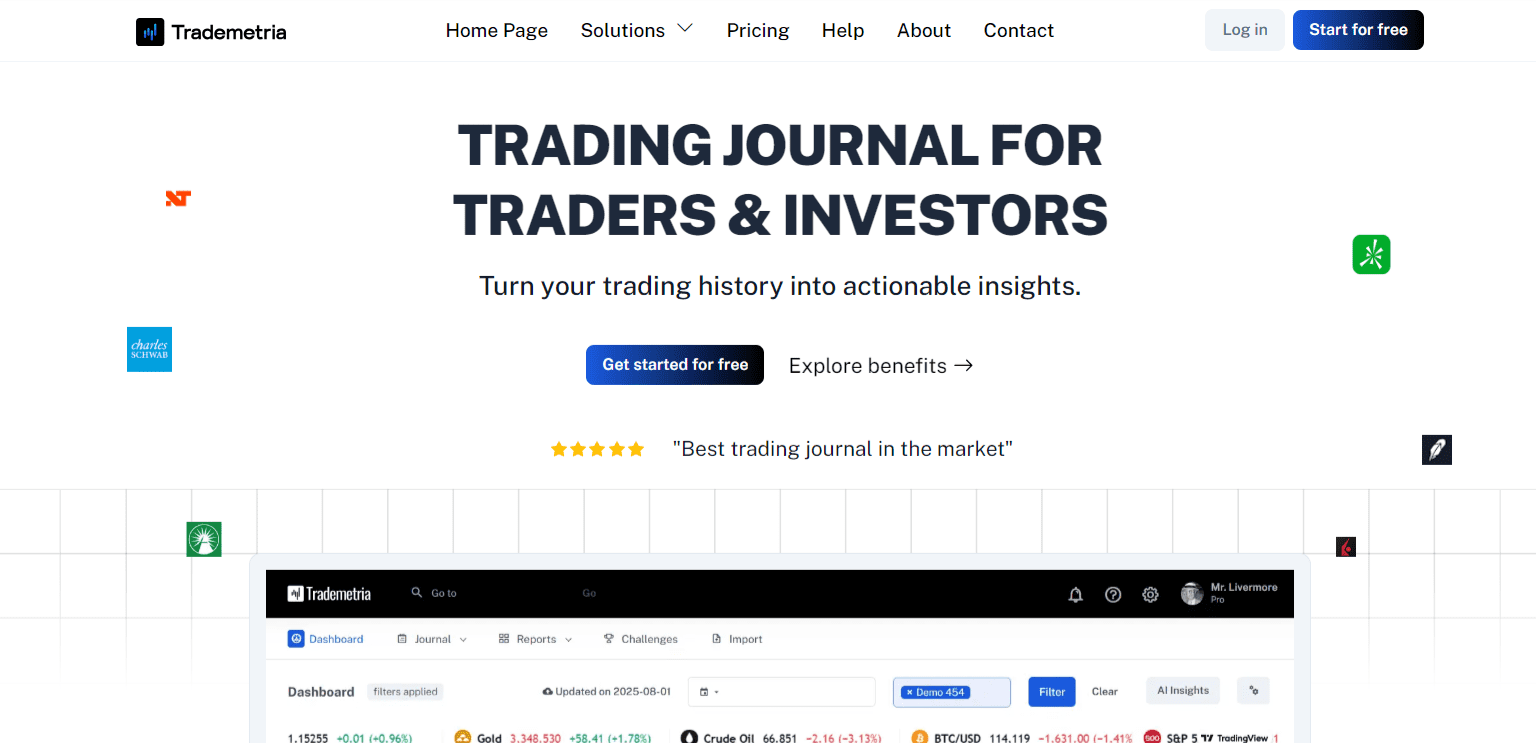
Trademetria focuses almost entirely on numbers and consistency metrics.
Instead of asking why a trade felt wrong, it shows whether risk, expectancy, and drawdown stay within acceptable ranges.
Emotional issues surface through statistical instability rather than notes.
Traders who leave psychology-heavy platforms often choose Trademetria to remove subjectivity from review sessions.
It is especially useful for traders who already understand their emotional triggers and want strict accountability.
The platform feels disciplined and unemotional, which helps some traders stay focused on execution quality instead of internal dialogue.
Best Use Case
- Traders who prefer objective accountability
- Systematic and rule-based traders
- Removing emotion from review sessions
5. TradesViz
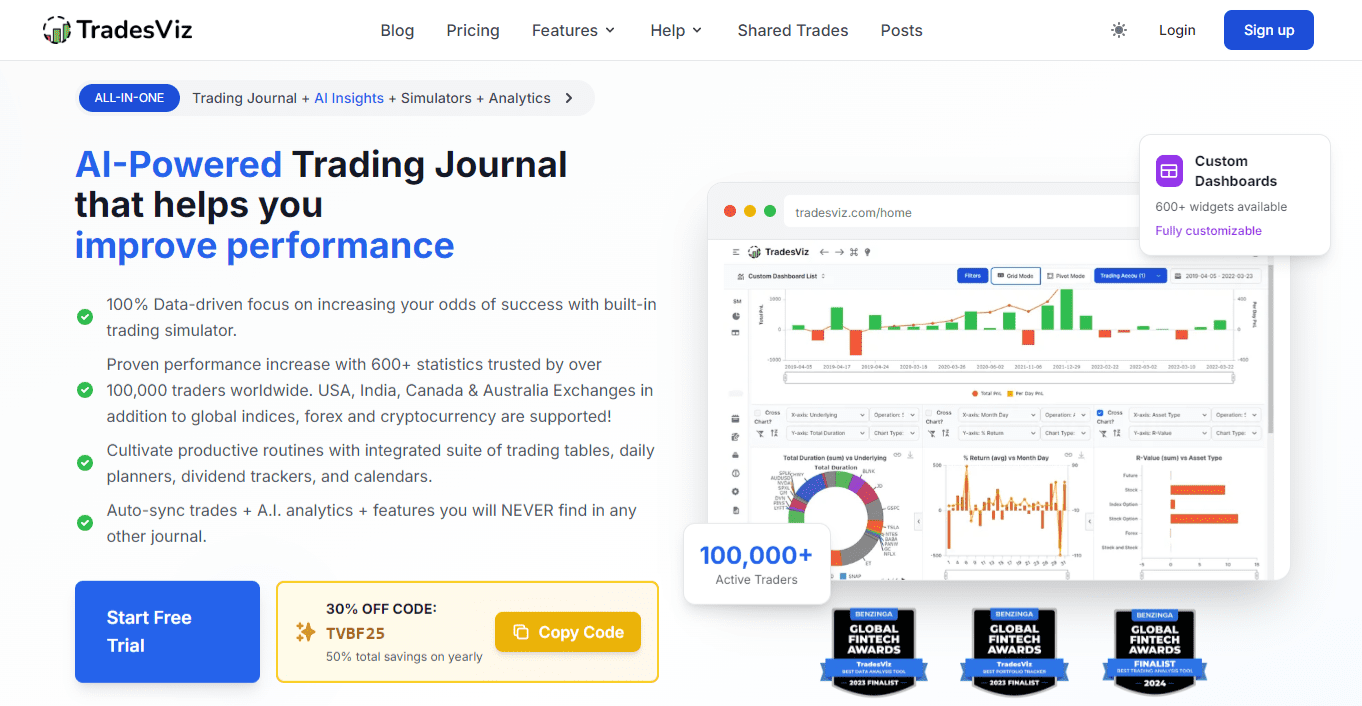
TradesViz gives traders full control over how performance and behavior are analyzed.
Dashboards, tags, and metrics can be customized to track discipline, mistakes, or emotional tendencies without forcing a fixed framework.
This flexibility appeals to traders who found EdgeWonk too prescriptive.
TradesViz does not guide psychology directly, but it allows traders to build their own behavioral tracking system.
Over time, patterns emerge through data visualization rather than prompts. It suits traders who want freedom to define improvement on their own terms while still keeping performance measurable.
Best Use Case
- Traders who want full customization
- Multi-strategy and multi-market traders
- Self-directed improvement workflows
6. StonkJournal

StonkJournal strips journaling down to its essentials.
It emphasizes clean trade logs, simple notes, and straightforward summaries that encourage daily reflection without pressure.
There are no heavy analytics or psychology frameworks, which makes it ideal for traders who felt overwhelmed by deeper journals.
StonkJournal helps traders stay consistent by lowering friction. Instead of analyzing emotions in depth, traders document decisions and lessons in plain language.
This simplicity often leads to better self-awareness over time because journaling feels easy and repeatable rather than demanding.
Best Use Case
- Traders who want simple daily reflection
- Beginners building journaling habits
- Traders overwhelmed by complex tools
Frequently Asked Questions
Do I Need a Psychology-Focused Journal to Fix Emotional Trading Mistakes?
Not always. Many traders fix emotional issues by improving structure, risk rules, and review habits. When execution becomes consistent, emotions often stabilize naturally. Psychology tools help some traders, but others improve faster by tightening process and accountability.
How Long Should a Daily Review Take to Stay Effective?
For most traders, 10 to 20 minutes is enough. Longer reviews often lead to overthinking and burnout. The goal is to spot one or two clear issues and make small adjustments, not to analyze every trade in detail.
Is It Okay to Stop Journaling Once Results Improve?
Stopping usually leads to regression. Journaling works best as maintenance, not just repair. Even profitable traders use journals to stay disciplined, catch small leaks early, and avoid slipping back into bad habits during tough market conditions.
What Matters More: Consistency or Depth in Journaling?
Consistency matters more. A simple journal used daily beats a powerful tool used once a week. Improvement comes from regular feedback loops. Depth can be added later, but only after journaling becomes a stable part of your routine.
Conclusion
EdgeWonk works well for traders who want deep psychological analysis, but it is not the right fit for everyone.
Some traders improve faster with data, others with structure, and some with simplicity. The best alternative is the one you will actually use consistently.
When review feels practical instead of heavy, discipline and confidence tend to follow naturally.